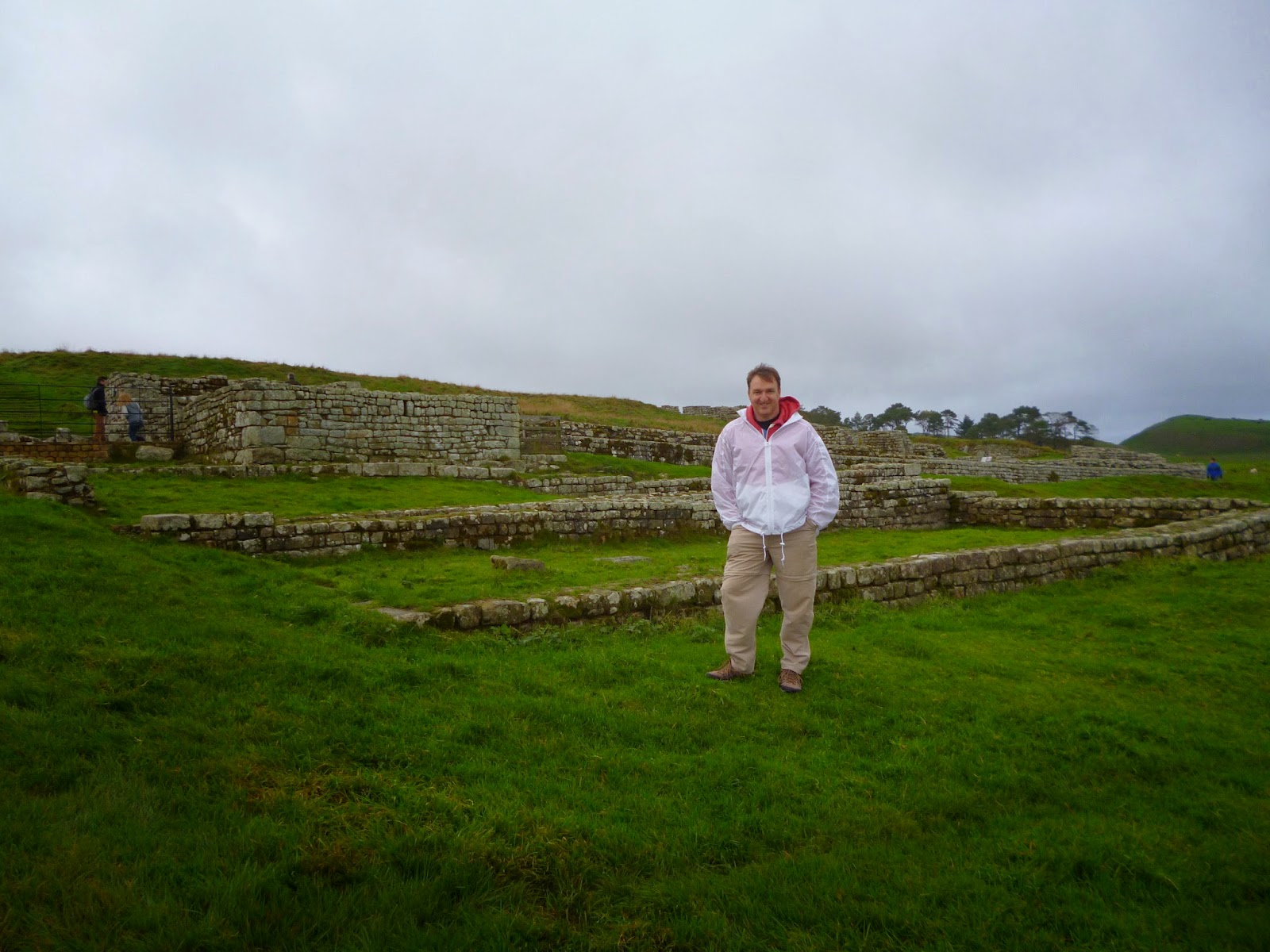
It’s been a while since I included a “photo of the day” in post so as I wait by myself, in a deserted dining room, abandoned by all and sundry who reside with me, waiting for the Easter Bunny to arrive, I felt it was a good time to include another one on my Blog.
Yes, it’s another shot from England but I do have about 2600 photos to choose from so you all may be bored to death from here to eternity with my photos long before I have exhausted them.
As you can probably guess from the photo, I am standing in yet another historic place. I imagine the brick ruins give it away but this is in fact Housesteads Roman Fort, the largest of the Roman encampments on Hadrians Wall in the north of England. I am at the edge of the empire. Inspecting the tip of the spear. Loitering where Rome’s finest protected the borders.
It’s interesting to note that most of these forts which dotted the line of Emperor Hadrian’s border with the barbarian world in Brittania were actually manned by auxiliary troops. Men who were formed into small scale units about a tenth of the size of a Roman Heavy Infantry Legion which, unlike the auxiliaries, would be recruited from the Roman citizenry. Auxiliary troops were non-Roman citizens, recruited to defend Rome’s interests with the dangling carrot of citizenship swinging precariously above them, ready to fall into their lap if only they could serve the twenty years required in order to receive it.
It must have been a hard and bleak existence in the 2nd century AD when Housesteads was established. It seems it was partly a cavalry fort and partly infantry and a small detachment of regular legionaries from the Augusta II Legion also garrisoned the fort for a period in the early days of it’s existence.
As I stood on the parapet, where the old gate to the fort faced north, I strained my eyes as I viewed the lush and green Northumbrian countryside in the distance, framed this day by low cloud and showers and seasoned with a biting wind and wondered how much different it looked in those far gone days in a society a 21st century man can barely imagine, as Roman soldiers stood guard and viewed what I saw as barbarian country and policed the border and checked the comings and goings from the
outlands, through the gates and into Roman territory. Did it look much different than it did all those centuries ago? It’s a question I can never answer.
All of these old forts now sit on farming land but they are administered by the national trust and the small museum on the site had displays of the fort as it may have looked in it’s hey-day and carried many artifacts which had been unearthed at the site, a window in time, looking back at the lives of men who played bit parts in a very big story.
Roman soldiers who dropped coins or other personal items, lost to them forever but found by people twenty centuries later could not ever dream of what civilisation has become or that the great empire of which they were protectors would one day turn to dust and only be known to humanity through history books and the physical remains of what they left behind like Housesteads Fort.
We owe them a debt of gratitude for their service and sacrifice and for protecting their world, a world which would one day morph into ours. Lest we forget.
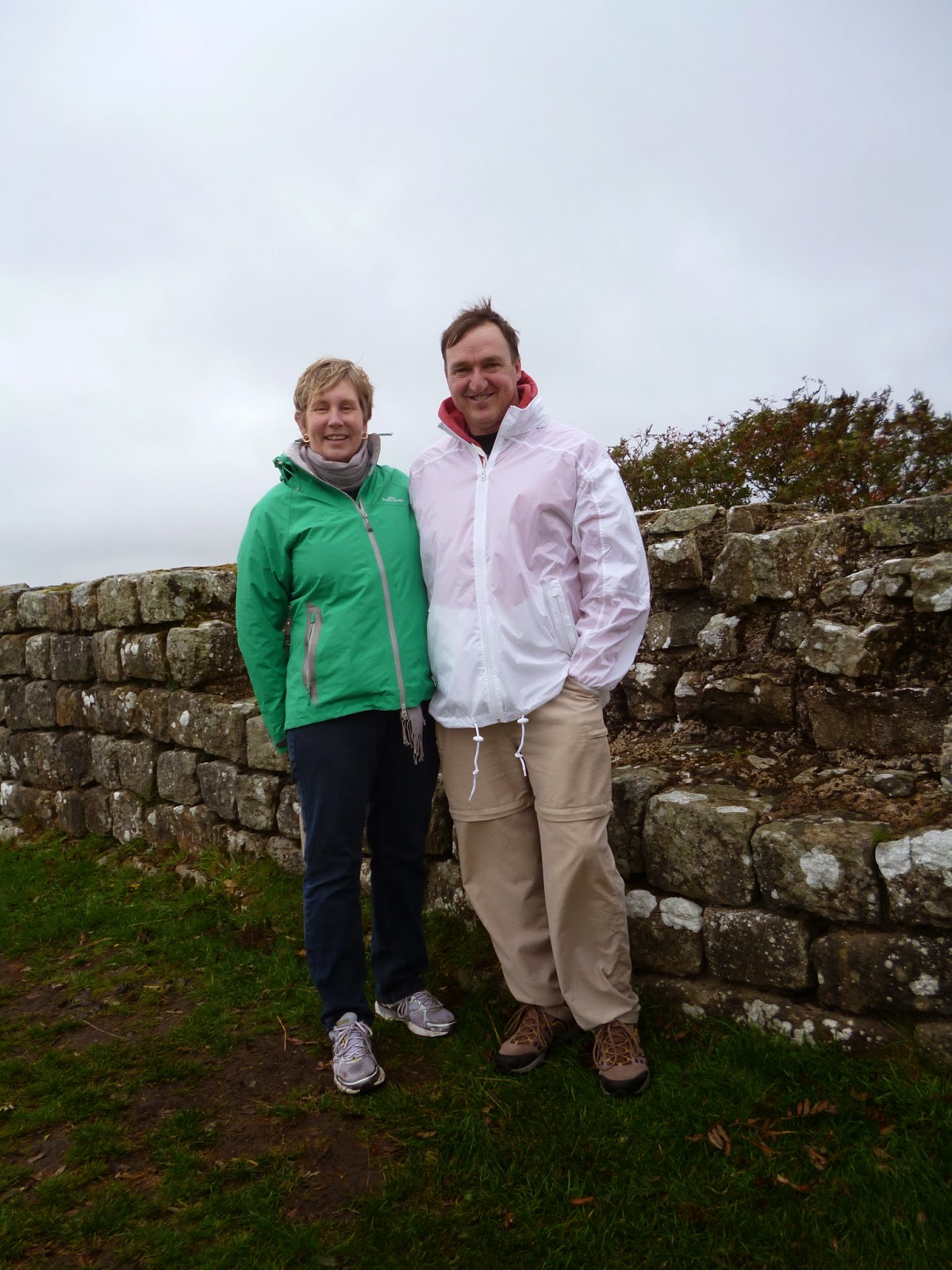
Earlier in the day Linda and I had stopped at another part of Hadrians Wall where a much smaller Roman installation had been located. All along the wall hikers and trampers now have their way and we were lucky as we gazed at the old stone ruins that a walker very kindly agreed to take our photograph together. There are not too many of the two of us on our trip so we were very grateful.
It’s a great myth to think that the Romans ruled by force. There were never enough of them to impose their will in such a way and provinces such as Brittannia, once they were overwhelmed in an initial Roman invasion, were only ever garrisoned by a pair of Legions, about ten or twelve thousand troops at full strength which it was unlikely they ever were and a leavening force of auxiliaries such as those who manned the Wall. Romans ruled by good government although they made their share of mistakes and conquered lands were never easy to settle.
Two major Legionary bases where the heavy Legions were barracked were well behind border, the city of Chester being one, but they were close enough to deal with trouble if need be.
If trouble did arise the local commander would summon every available man of his command and march to the heart of the insurrection and put it down if he could. If he failed, those rebels who had overthrown Roman rule and spat on Roman law could expect a dose of heavy medicine as Rome gathered forces from across her empire to take back what was hers. Roman defeats were never left unavenged.
And so, if you are ever lucky enough to visit the northern parts of England, make sure you call into one of the old Roman forts or just have a look at Hadrians Wall itself. Living history in it’s ancient form.
Have a happy Easter.
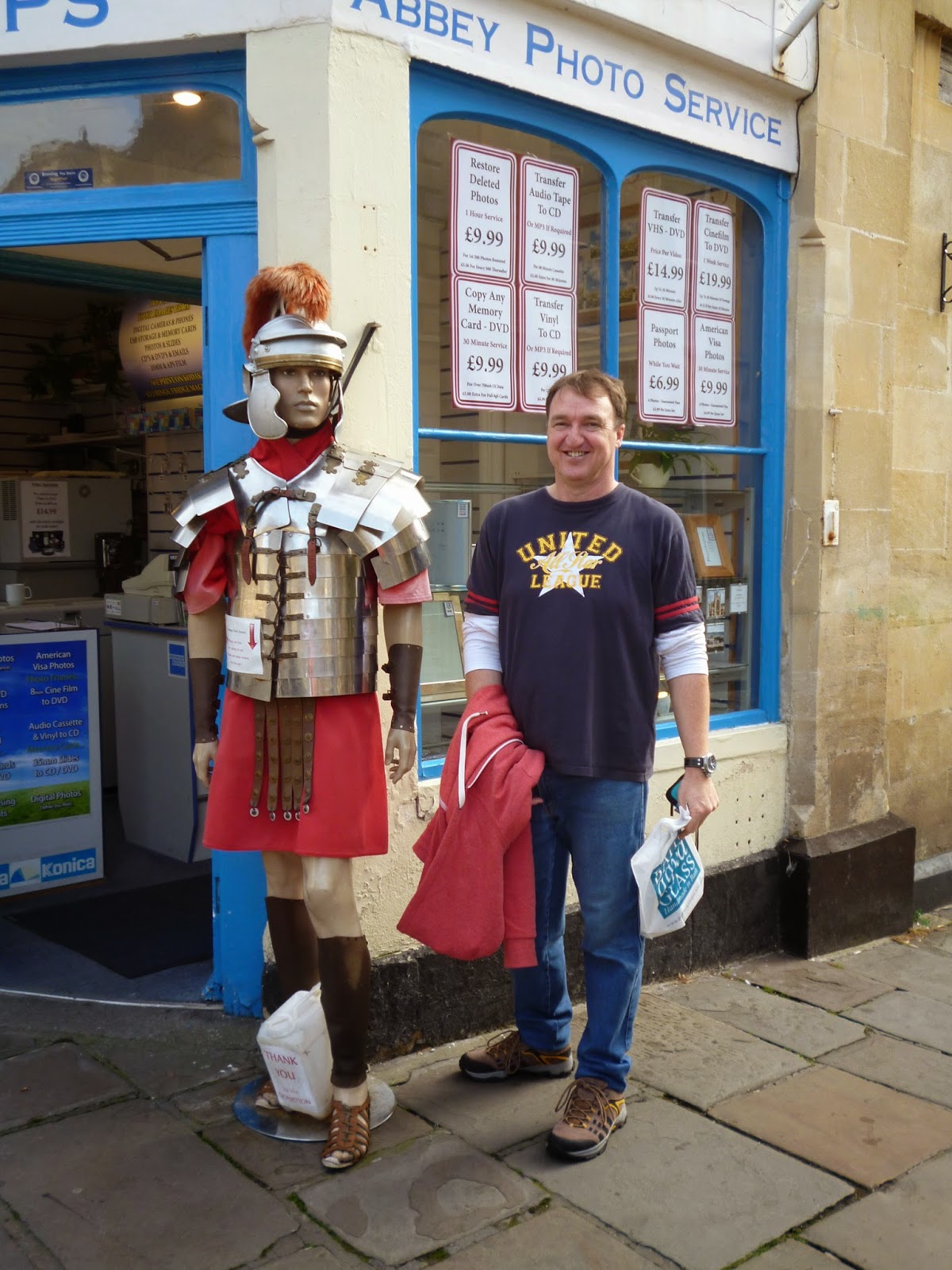 |
| I doubt this guy ever saw action! |
 Strange Notations From a Laborious Life