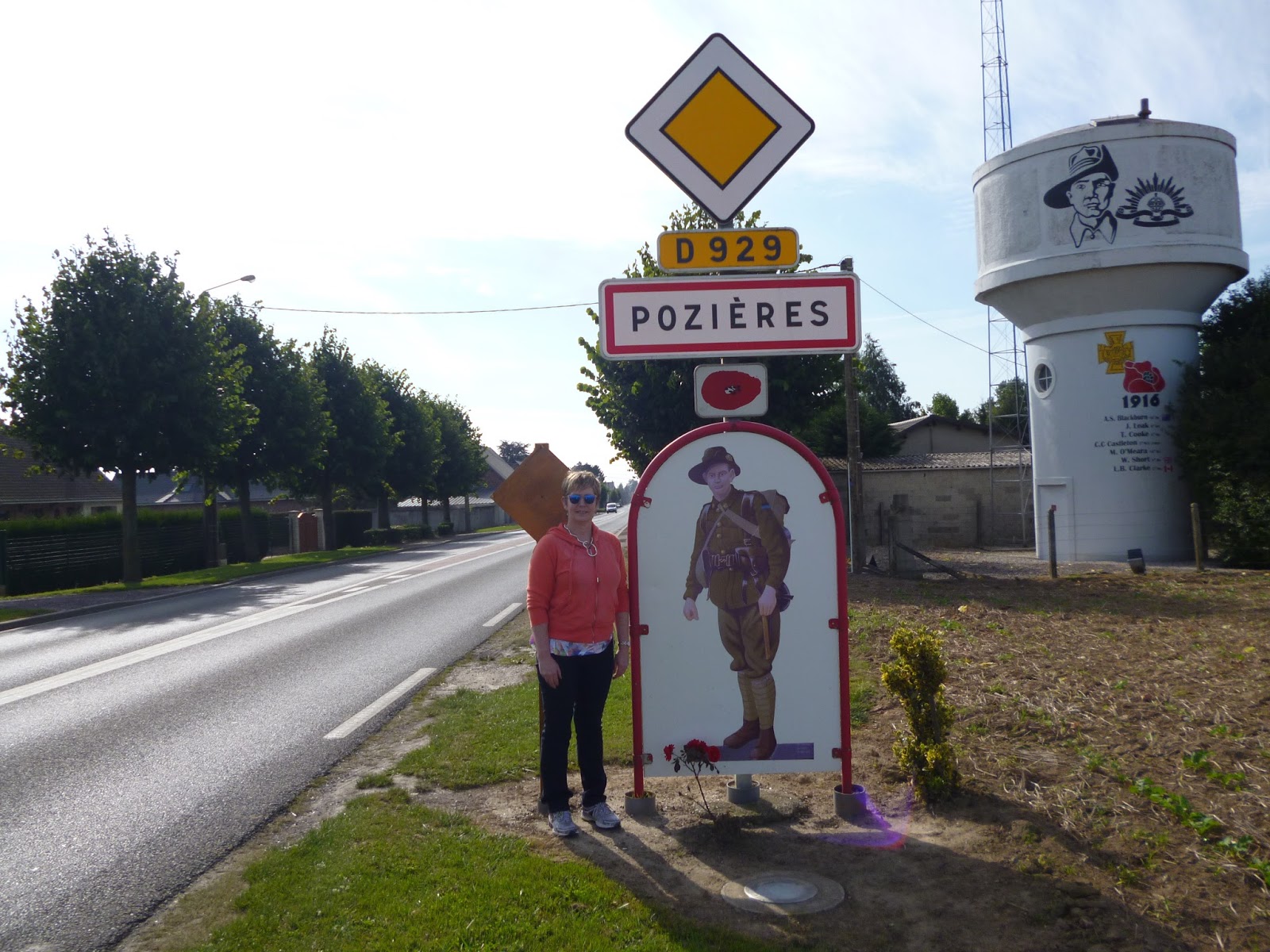
This is a picture of Linda, my lovely better half standing on the outskirts of the village of Pozieres in northern France on the 1st of October 2013. Pozieres, as I have described it a few times on this Blog, was the site of the bloodiest battle ever fought by Australian soldiers. 23 000 diggers fell within half a mile of this town sign in six weeks of hard fighting during the Somme offensive in the summer of 1916. The Australians captured the town and endured the heaviest artillery bombardment in the history of warfare as the Germans threw everything they had into a determined counter-attack. But the Australians held on and history records the Battle of Pozieres as a victory for the army from Downunder. A pyrrhic one as it turned out.
Another great battle will be fought out on this stretch of road come July as the 5th Stage of the Tour de France traverses these parts and it seems, pays homage to the sacrifice of the Australian Imperial Force of the Great War. If you pay very close attention in the early hours of July 9 as the kilometres count down in the 5th Stage, you will almost certainly get a quick glimpse of this road sign and the smiling Digger on the water tower behind it. In fact the whole stage is a homage to the English speaking fighting men who came to France to defend her liberty in the dark days of the 1914-18 war with the race starting at Arras, the scene of a gallant yet doomed counter-attack by the British Army in another world war two decades later. The race then swings south onto the old Hindenburg Line past Vimy Ridge, home to Canada’s National Memorial. Vimy Ridge is Canada’s Pozieres, spoken of in hushed and reverent tones whenever Canadian fighting men are mentioned.
The race continues south and will touch a personal nerve for me as it passes through the otherwise inconsequential village of Lagnicourt-Martel, the little town where my 20 year old great uncle was mortally wounded in 1917.
The stage rolls on to Peronne before turning west, crossing the A1 motorway from Paris before heading north then leaning north-west, passing another national memorial, that of South Africa on the famed field of Delville Wood before reaching the Bapaume-Albert Road, the stomping ground of the old AIF.
 |
| Pozieres Ridge |
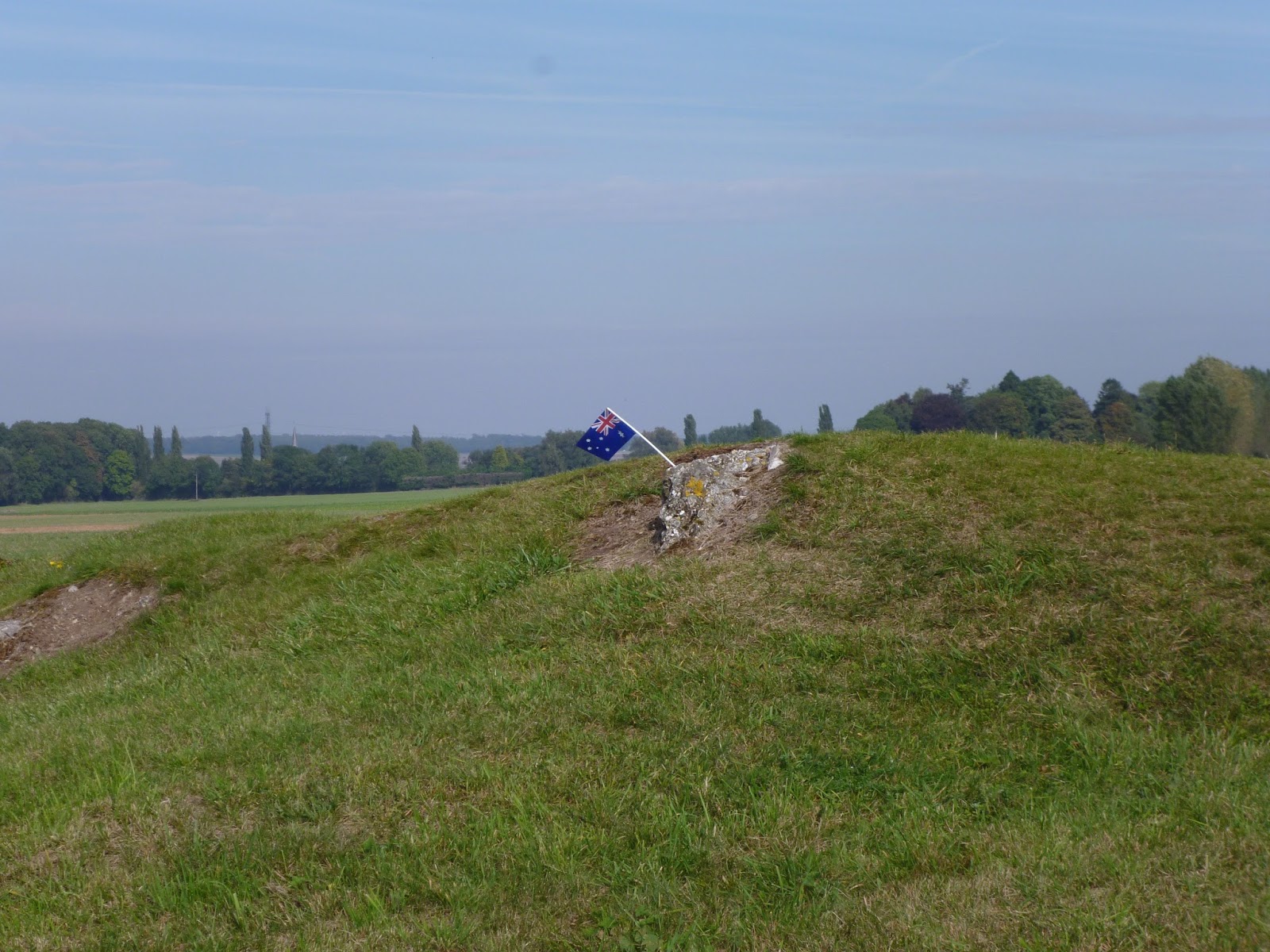 |
| The Pozieres Windmill site. |
The race swings left at Martinpuich and moves through terrain which would be easily recognizable to men such as Albert Jacka VC who performed an heroic act of gallantry in the vicinty before reaching the town where so much sacrifice was made by men from the Great Southern Land. It is said more Australian blood was sown into the dirt on Pozieres Ridge than any other place on Earth. The windmill which was once a German Army command post and captured by Australians was bought by the Australian government after the war. A little piece of France will forever be ours.
Anyone who doesn’t know of the devastation wrought on this town in those dark days of 1916 would never guess today it was the scene of so much human madness almost a century ago. It is a typical little French village, well kept houses, green, well manicured lawns, a nice little place on the way to somewhere else. The surrounding fields tell the tale and in their bowels lie thousands of young men from Australia, lost forever from their homes and hearths.
The race will turn right in the vicinity of First Australian Division Street (Yes, that’s what it is called!) and will pass the memorial to that magnificent formation, the heart of Australia’s army, the men who captured Pozieres.
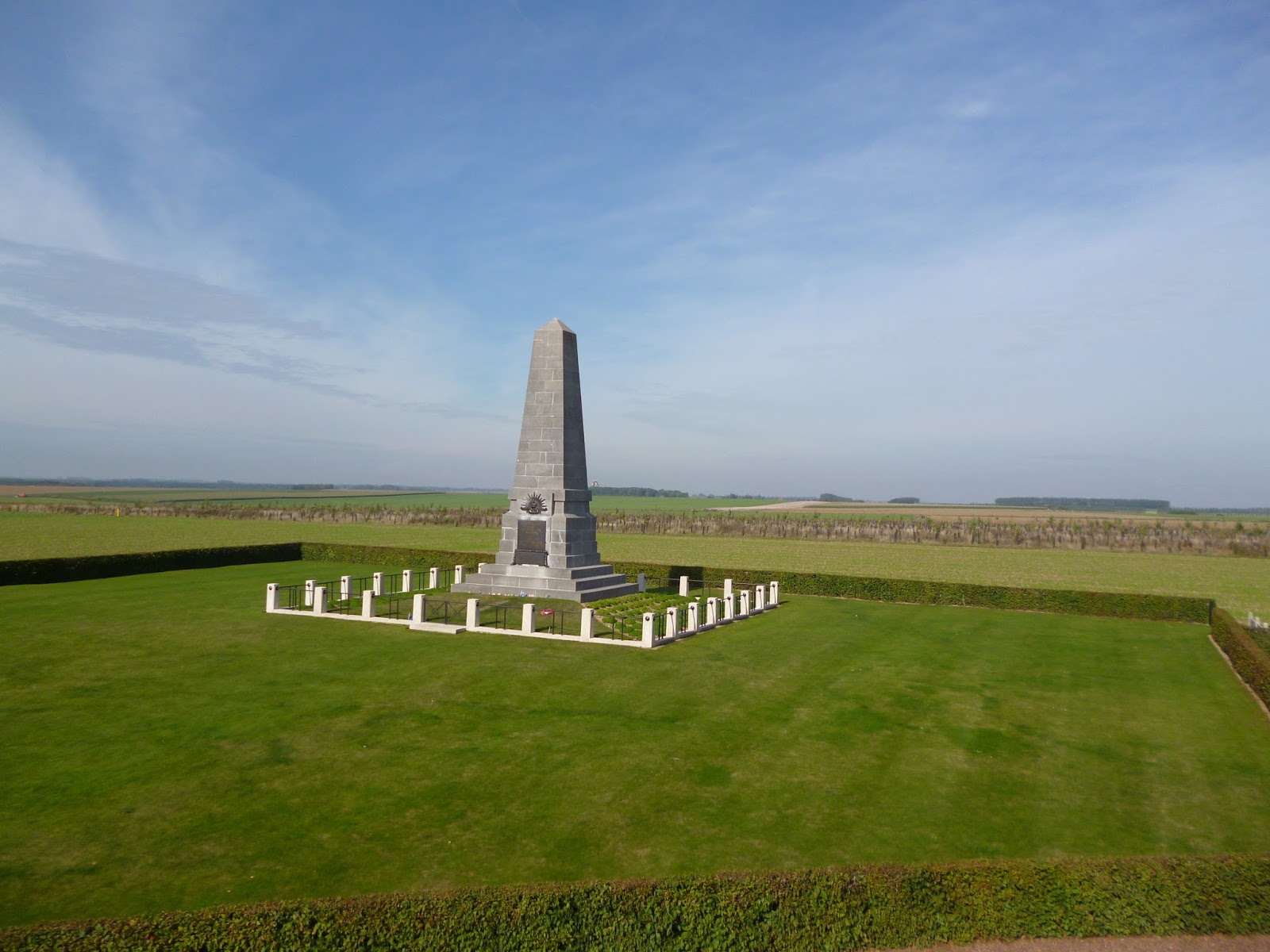 |
| 1st Australian Division Memorial |
Beyond Pozieres lies some undulating country, green as far as the eye can see and one can only imagine that many an Australian country boy wept at the destruction visited on such burgeoning farmland.
Leaving Pozieres, if you watch the television closely, you will notice a huge memorial on the skyline as the race continues west. It is the memorial at Theivpal, dedicated to the thousands of British soldiers who died in the Somme offensive who have no known grave. An impressive memorial if ever there was one and I can only imagine the detour off the Albert-Bapaume Road is exclusively designed to take in the site.
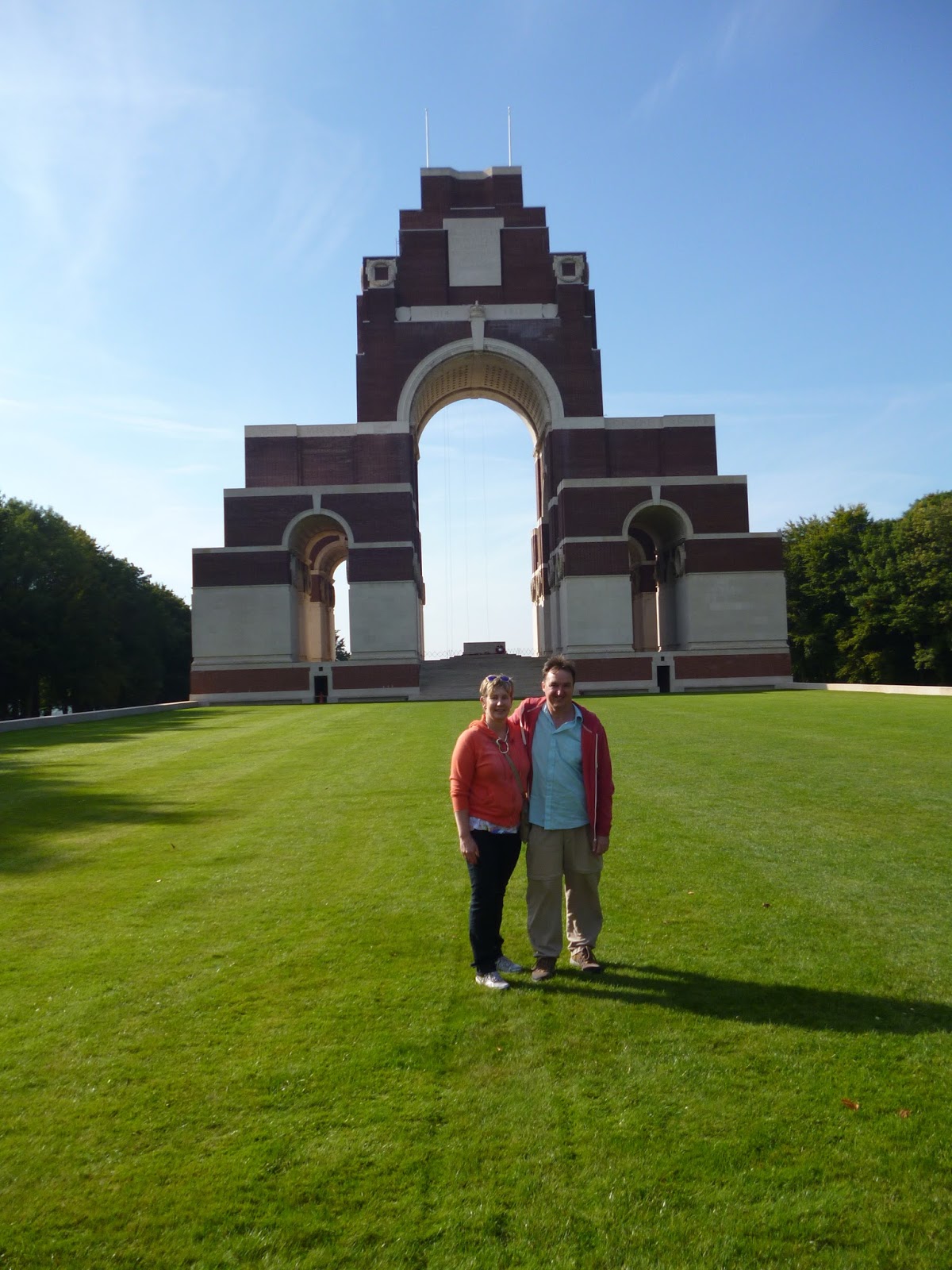 |
| Linda and I at the Theivpal Memorial |
The riders will continue south to Albert, a major allied base during the Great War, through Dernancourt and will pass the great Australian National Memorial at Villiers-Bretonneux, the site of national commemoration for Australia in France, with 20 kilometres to go.
The stage will terminate in the city of Amiens, famous for it’s cathederal and for being the target of the last great offensive of the German Army of the First World War.
Instituting new tactics, the Germans broke the British line in 1918, easily overrunning all that was fought for two years earlier. Hard won gains at places like Pozieres were given back in a day, the British army was breathing it’s last gasp and the way to Paris seemed open. The Kaiser’s army was on the cusp of victory.
On a hill outside Villiers-Bretonneux, the AIF stopped the last great roll of the dice the German’s threw, saving the town and stopping the enemy short of Amiens. The war would end three months later after a last Allied offensive sealed Germany’s fate, an offensive the AIF again played a major part in.
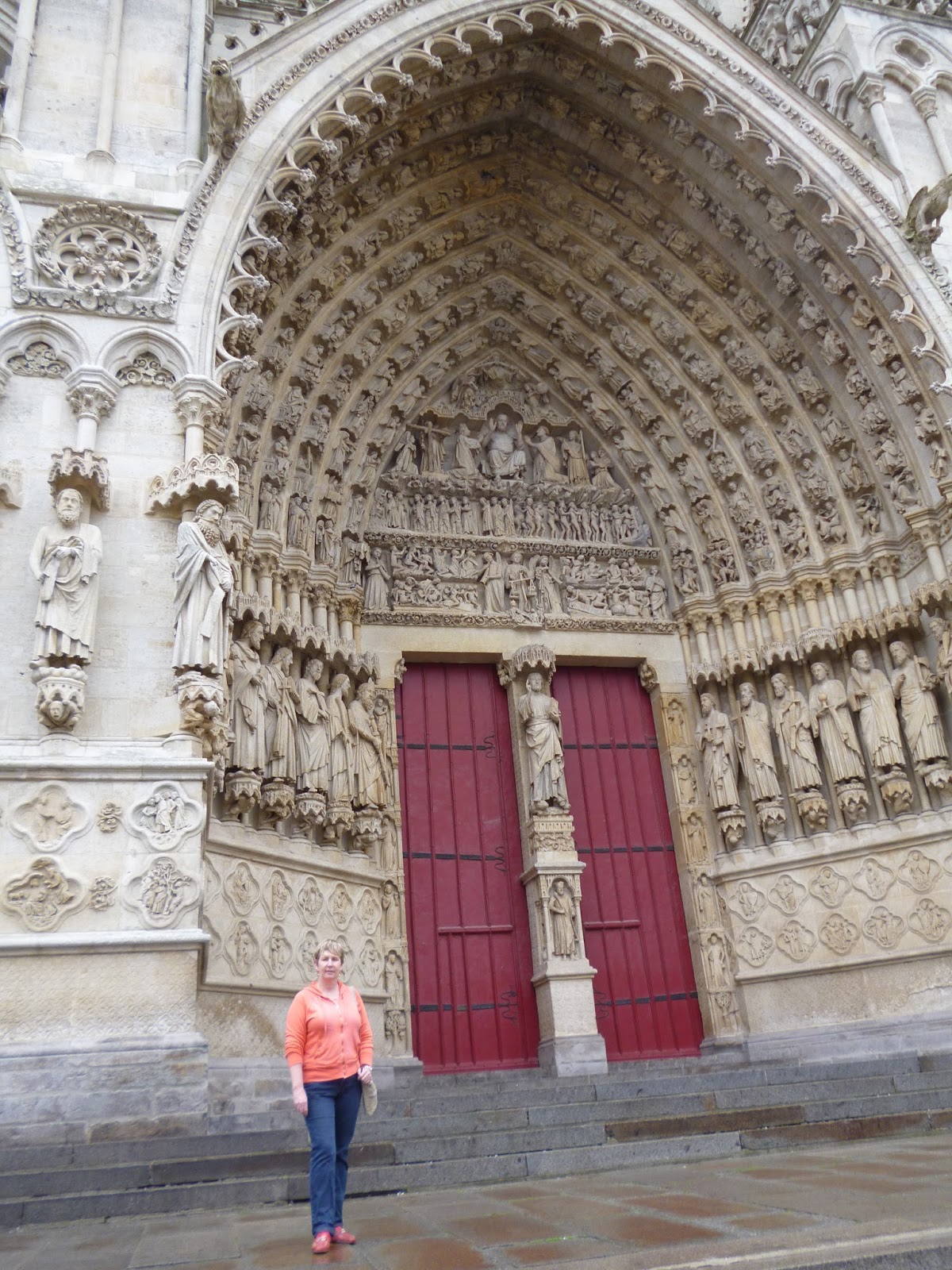 |
| Linda outside Amiens Cathederal. |
Amiens is a university town nowadays and the streets are full of students, more worried about what lies ahead than what has happened in the past, and it is a very pleasant place to spend an afternoon as Linda and I did in October 2013.
I can only imagine, given the prominence of English speaking riders in recent versions of the Tour de France, this stage, a mini-tour of some of the famous battlefields of the First World War where English speaking soldiers gave their all, has been specifically planned by the race committee. It will certainly give me goosebumps to see the magnificent countryside again and I hope all Aussies will enjoy seeing where their countrymen fought and died and made our nation’s name. It is still held in high regard by those who live in the region.
Lest we forget. Viva le Tour!
 Strange Notations From a Laborious Life