
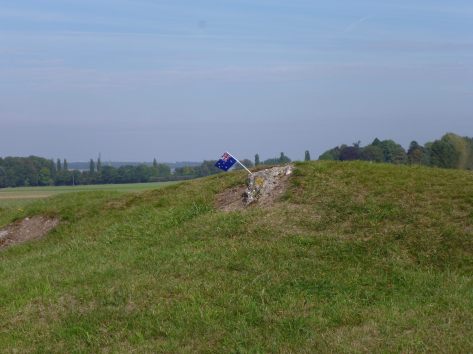
It’s Anzac Day, the great Australian national day when we remember the sacrifice of young men and women from this country in days gone by and those who still serve, suffer and sacrifice today. Whether it be service on the South African veldt in 1900 or the scree strewn mountains of Afghanistan in the early 21st century, we will remember them.
One thing Anzac Day is guaranteed to do is bring out the revisionist historians and the pseudo-intellectuals with some sort of a profile on social media who believe anyone who has ever shouldered a rifle or had a good look at the working end of an enemy AK-47 is in league with the devil and should be jeered rather than cheered for answering the nation’s call. Of course freedom of speech is a national institution or so we would like to think. Isn’t defending the right to have an opinion, even if it isn’t one you might necessarily agree with one of the major reasons for sacrificing our greatest resource in far flung deserts and jungles and hills and fields? Just last year soccer (sorry, football) journalist Scott McIntyre made a right goose of himself by tweeting his ill-informed and twisted view of Australians at war on social media, costing him his job with SBS television but at least providing him some notoriety. Some claimed that by being sacked he was being denied the right to free speech. No he wasn’t. He is as free to claim those things today as he was a year ago. If the vast majority of people disagree with him then that is their choice too. The right to freedom of speech often has unintended consequences as Mr McIntyre found out. I wonder what became of him?
Another “new age” historian by the name of Nick Irving has come to my attention in the last few days. He writes for what seems to be an online journal called “junkee” and boy, he is as anti-Anzac Day as they come. I would normally let an article like the one he wrote about Anzac Day pass through to the keeper as he is well and truly in a very small minority with his opinion but I found his point of view so offensive that I thought I had to bring some attention to it and let readers decide for themselves what to make of the article. Now I don’t claim to be the most brilliant star in the universe but it seems to me that Mr Irving is linking Anzac Day to some sort of “veneration of Australian masculinity” which in turn has warped our sense of what it means to be a man in Australia today which in turn has led us to be a society which accepts violence against women because soldiers in war are trained to kill! At least that is what I think he is saying. And I thought Anzac Day was just about honoring and remembering those who have fallen in war?
He references the Surafend incident in which a bedouin village was massacred by Anzac troops and the so-called “Battle of the Wazzir” where Australian soldiers rioted in the red-light district of Cairo as examples of the violence against women which Australian men are capable of and passively support today. Unfortunately he doesn’t refer to them in context. Australian soldiers were only involved on the peripheries of the Surafend massacre and the riot in the El Wasir district was caused by the frustration felt by soldiers at being constantly ripped-off by the locals. In both instances, particularly the Surafend killings, human decency was was lost but there were extenuating circumstances and the British authorities of the day certainly didn’t condone it. They were both tawdry and despicable affairs but let’s not coat Anzac Day with a lacquer of shame because of it.
Over 300 000 men of the Australian Imperial Force passed through Egypt on the way to the Great War. Tens of thousands never returned. I’m sure only a handful of them were wife-beating, murdering, racist thugs.
My grandfather and great uncles volunteered to fight for Australia, my maternal grandfather and great uncle in the First World War and my paternal great uncles in the Second World War. They were unfortunate enough to find themselves in some of the most vicious campaigns ever fought by Australian soldiers and my maternal great uncle never returned from France. None of them as far as I am aware ever condoned violence against women or passively endorsed the right of Australian men to hit, hurt and kill the opposite sex. It is an insult to them and their memory for Nick Irving to suggest it, as he seems to be painting the Australian soldier with a very broad brush.
It is sad that people think like Nick Irving but there must be small minority who do. I have a completely opposite view. A real man would never hit a woman and I have met plenty of masculine men who have served in the armed forces or simply been average blokes who feel the same way. Violence against women has nothing to do with a “veneration of masculinity” on Anzac Day. It has everything to do with scumbags who exist in every society who can’t control their anger or emotions.
I’m sure there were men who came back from the wars with spirits and bodies broken and who committed crimes as a result. But to cast aspersions on a generation of Australian men who did it tough and paid the price is an insult.
Anzac Day for me is a commemoration of a great sacrifice. For the loss of young men and the grief of their families. The Great War left a whole in Australian society which could never be filled. Perhaps Nick Irving could simply hold his fire and keep his view to himself on such days. At the very least the families that were left behind deserve that respect.
Lest we forget.
 Strange Notations From a Laborious Life